iPhone 14 Pro Revolutionizes Scanning with Lidar: 100 Times Faster than Photogrammetry
In the ever-expanding realm of 3D modeling, augmented reality, virtual reality, and three-dimensional virtual objects, Lidar sensors are ushering in a new era of possibilities.
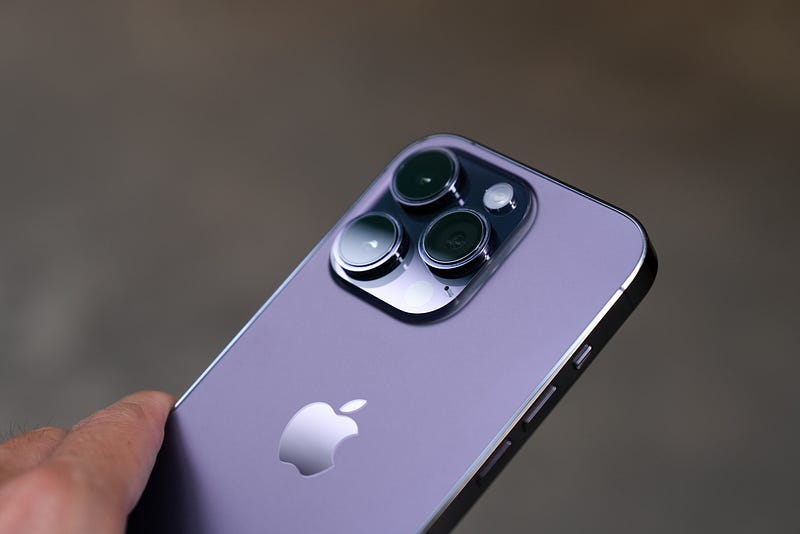
Lidar, a technology embedded in the iPhone 14 Pro, stands for Light Detection and Ranging. It utilizes lasers to measure distances and positions of objects, providing a robust tool for crafting 3D objects.
Compared to photogrammetry, Lidar is in a league of its own when it comes to speed. Photogrammetry involves capturing photographs of objects and then assembling them into 3D models on a computer — a process that can be time-consuming and costly.
Lidar offers a faster and more efficient avenue for creating 3D objects. This surge in demand for 3D objects is poised to amplify the market, propelling the growth of 3D modeling, augmented reality, virtual reality, and three-dimensional virtual objects.
Beyond its 3D modeling capabilities, Lidar opens doors across various industries like gaming, film, and education. In the gaming realm, the integration of 3D objects can forge remarkably immersive experiences. In film, it contributes to crafting more realistic and captivating scenes. In education, 3D objects hold the potential to revolutionize learning with engaging and effective experiences.
The allure of Lidar lies in its potential for new and groundbreaking applications. As this technology continues to evolve, it is foreseen to not only expand the market for 3D objects but also revolutionize other sectors.
In essence,
Lidar stands as a revolutionary technology for creating 3D objects, igniting a surge in demand and fueling the growth of the 3D modeling, augmented reality, virtual reality, and three-dimensional virtual objects market. Its versatility spans across diverse sectors like gaming, film, and education, with the promise of a dynamic and exhilarating future.